
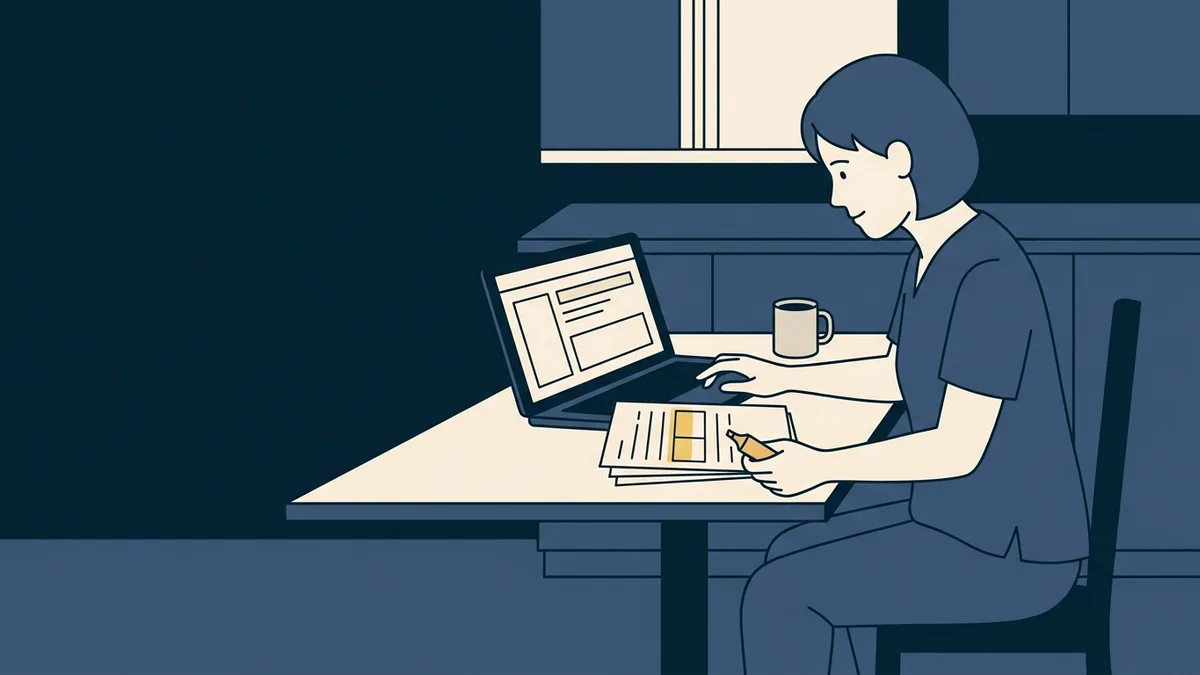
Look up your license on each issuing board's public verification site and your privileges through the compact commission's lookup, a few times a year and before any job change. Confirm status, expiration dates, name and any public actions. Errors and lapses are far easier to fix when you find them first.
Your wallet card, a framed certificate and the renewal confirmation email all describe a credential at a moment in time. The public verification record describes it now, and it is what an employer, a credentialing office, a payer or a board investigator will look at. Many clinicians see that record for the first time when someone else shows it to them.
Where to look, and what to read
For each license, use the issuing board's own verification lookup. For compact privileges, use the lookup provided by the compact commission at ptcompact.org, and check the remote state's board as well if it displays privileges. Check the home license first, because every privilege stands on it.
Read more than the status field. Confirm the expiration date matches what you expect, that the renewal you completed actually posted, that your legal name is spelled the way it appears on other records, and that the license type is correct. Look for any public action or note. A privilege should show as a privilege, tied to the right home state.
If you hold licenses in states you no longer work in, look those up too. Inactive and lapsed credentials still carry history, and a matter on one of them affects compact eligibility.
Some employers and credentialing offices enroll staff in ongoing license monitoring, which flags a change in status automatically. That is useful, but it is built to protect the employer, and the alert may reach a manager before it reaches you. Your own checks remain the only ones designed around your interests.
Timing the checks
A useful rhythm is a few times a year, plus a check at specific moments: a week or two after any renewal, before signing a new job or travel contract, before a credentialing or recredentialing packet goes out, and after any move or name change. Save a dated screenshot or printout each time. If a question ever arises about when coverage began or ended, a record you captured is far better than memory.
Fixing what you find
Errors happen. A payment fails silently, a renewal sits unprocessed, a name change reaches one system and not another. Contact the board that owns the record in writing, describe the problem plainly, and attach what supports it. Keep the correspondence and check the record again after the board confirms the fix.
If the record shows a lapse you did not expect, stop practicing under that credential until it is resolved and talk to the board about reinstatement. If it shows an action you do not recognize, contact the board and consider a licensing attorney. In either case, finding it yourself gives you time to respond before an employer or investigator asks the question for you.
Common questions
- Where can I verify a compact privilege?
- The compact commission at ptcompact.org provides a way to look up privileges, and the remote state's board may also show them. Your home license is verified on the home board's own lookup, since every privilege depends on it.
- How often should I check my own license status?
- A few times a year works for most clinicians, plus before any new job, contract or credentialing packet, and shortly after every renewal to confirm it posted. More frequent checks make sense if a renewal is close or a matter is open.
- What should I do if my verification record is wrong?
- Contact the board that owns the record in writing, explain the discrepancy, and attach supporting documents such as a renewal confirmation or payment receipt. Keep copies, and check the record again once the board says it has been corrected.
- Why does the public record matter more than my license card?
- Employers, payers and investigators rely on primary source verification from the board. A card or certificate shows what was true when it was printed, while the board's record shows what is true today.
Need Help with Your Application?
We handle the PT licensure process end-to-end — eligibility screening, documents, board follow-ups, and tracking.