
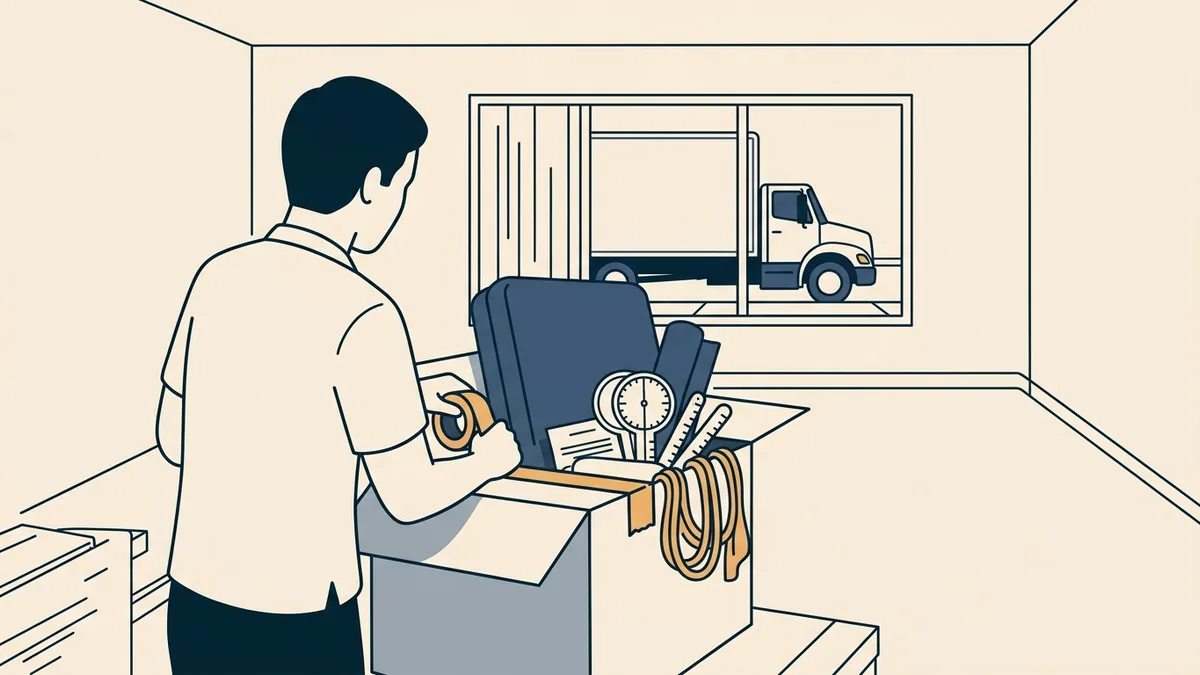
For a permanent move, start the license application in the new state early and treat any compact privilege as a narrow bridge, not the plan. Privileges assume you live in your home state. Once you reside in the new state, your home state changes, so read the compact's change-of-residence rules and confirm timing with the destination board.
A therapist with ten years in one state takes a job three states away. The new employer wants a start date. The compact seems to offer a shortcut: buy a privilege in the new state, start working, and sort out the license later. Sometimes a privilege has a role during a move. Often the plan rests on a misunderstanding of what a privilege is and whom it serves.
Privileges are built for people who live somewhere else
A compact privilege lets a therapist practice in a remote state on the strength of a license in the home state, which is the state of primary residence. The design assumes you live in one member state and work in another. A permanent move breaks that assumption. Once you live in the new state, your old license is no longer a license from where you reside, and the footing under the privilege shifts with it.
That is why licensure by endorsement is the standard route for a permanent relocation. A privilege may help at the edges. It is not the destination.
Two moves that look alike and are not
Moving between two actively issuing member states is the easier case. The new state becomes your home state, you will need a license there, and the compact has rules for how that change works and what happens to the privileges you already hold. Those rules are specific and published on ptcompact.org. Read them for your situation before assuming a privilege in the new state will cover your first months as a resident.
Moving from a member state into a state outside the compact, or into Maine, Michigan or Rhode Island while they are enacted but not issuing, is different. Privileges need a home state that can support them, and those states cannot. Every privilege ends when your home-state status ends, and any other state where you intend to keep working will need its own license application.
Moving from a non-member state into a member state runs the other way. You arrive with no compact eligibility and gain it once you are licensed in the new home state.
Sequencing that usually works
Start the endorsement application in the destination state as soon as the move is likely, not after it happens. Endorsement asks for verification of your license history from every state that has licensed you, confirmation of your NPTE result, and often a jurisprudence exam. None of that depends on your having moved, and all of it takes time you do not control.
Keep the old home-state license active and unencumbered throughout. It is the credential under any privilege you hold, and it covers your remaining work before the move. Letting it lapse early to skip a renewal is how a therapist ends up in a gap with no credential that covers them anywhere.
Talk to the destination board about timing before you pick a start date. Ask what applies to someone relocating from your current state and whether anything bridges the gap in your situation. Write down the answer and who gave it.
Only then set a start date with the new employer, and make it conditional on the license being active on the state's verification record.
How the privilege-first plan goes wrong
The most common failure is residency drift. A therapist buys a privilege in the new state, starts working, and signs a lease there. The privilege was issued against a home state they no longer live in. The employer sees an active privilege on the verification site and assumes all is well. Nobody checks the address.
Home state is anchored to residence, and boards ask. Listing a home state you no longer live in is an accuracy problem on a regulatory record, and boards do not treat it as a technicality.
The second failure is letting the endorsement application sit. The privilege is working, so the license feels less urgent. Then the old license comes up for renewal, the therapist no longer lives in that state, and the question of which credential is valid arrives all at once.
The third is forgetting the other privileges. A relocating therapist who also holds privileges for PRN or telehealth work in other states has to account for every one of them when the home state changes, not only the one in the destination.
Pitfalls on the employer side
New employers sometimes accept a privilege at onboarding without asking whether you have moved. Their credentialing checks that a credential exists, not whether it is the right one for a resident. Do not treat their acceptance as confirmation. Payer enrollment is a separate track again: an active license or privilege does not mean the plans the clinic bills have you on file in the new state.
If the destination is outside the compact
Build in time. There is no fast route into California, Florida or New York, and once your home state is outside the compact there is none into the states where you held privileges either. File the endorsement application early, then decide which other states still matter enough to license in by endorsement as well.
A short checklist before the truck arrives
Confirm the compact status of both states on ptcompact.org. Read the compact's rules on changing home states. Start the endorsement application. Keep the old license active until the new one issues. List every privilege you hold and decide what happens to each. Update your address with every board that licenses you. Set the start date only after the credential is in hand, or with the employer's written agreement that the date can move.
Common questions
- Can I work in my new state on a compact privilege after I move there?
- Do not assume so. A privilege rests on a license from your state of primary residence, and moving changes that state. The compact publishes rules for a change of home state; read them on ptcompact.org and confirm your situation with the destination board.
- When should I start the license application in the new state?
- As soon as the move is likely. Endorsement involves verifications from every state that has licensed you, your NPTE record and often a jurisprudence exam, and none of it requires you to have moved yet.
- Should I let my old license lapse once I move?
- Not until the new license is active and you have decided what happens to any privileges. The old license may be the credential under those privileges and under your final weeks of work before the move.
- What happens to my privileges if I move to a non-member state?
- They end, because a non-member state cannot serve as a compact home state. Each state where you want to keep working will need a license by endorsement.
Need Help with Your Application?
We handle the PT licensure process end-to-end — eligibility screening, documents, board follow-ups, and tracking.