
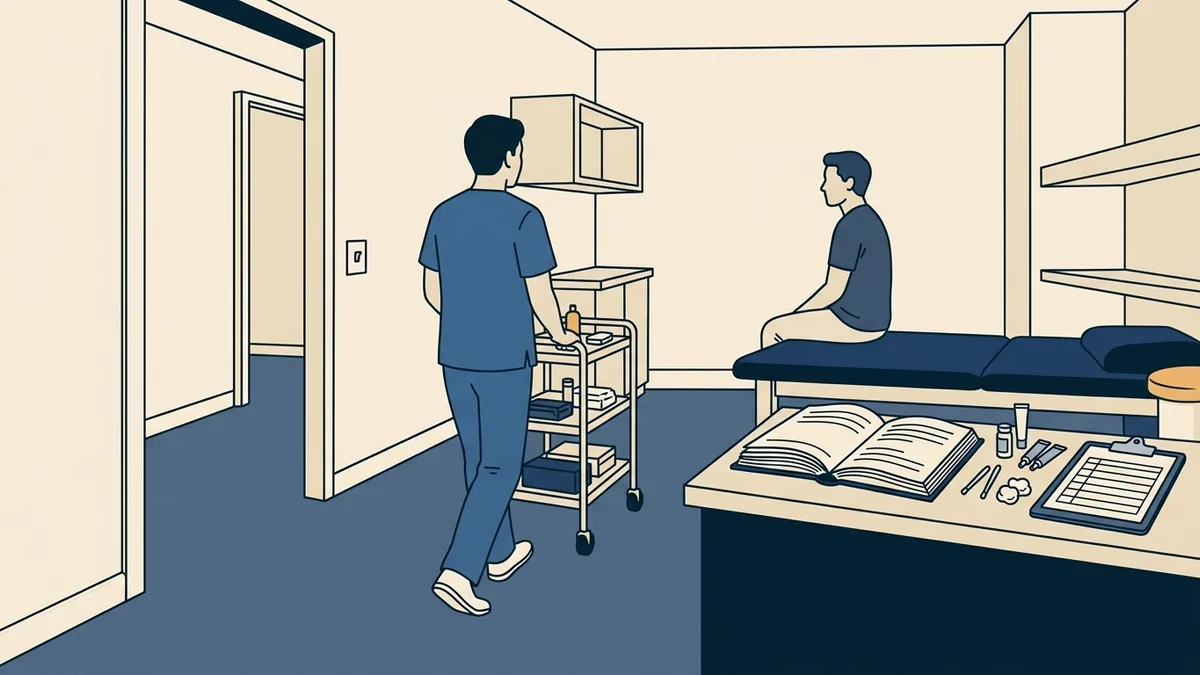
A compact privilege authorizes you to practice in a remote state and nothing more. Direct access limits, dry needling and manipulation authority, supervision ratios, documentation standards, telehealth rules and mandatory reporting all come from that state's practice act. Your home state's rules do not travel with the privilege.
Compact privileges are sold, correctly, on speed. What gets less attention is the boundary of what they actually do. A privilege answers one question — may you practice in this state — and it answers nothing else.
Everything about how you practice comes from the remote state's practice act. Your home state's rules do not travel with you, and the fact that you arrived through a compact rather than through an application makes no difference to any of it.
Direct access is the biggest variable
Every state permits some form of evaluation and treatment without a physician referral, and almost every state qualifies it. The qualifications are where the differences live: a visit limit, a day limit, a requirement to refer out if the patient is not progressing, a carve-out for particular interventions, additional experience or education requirements on the therapist, and separate rules for particular payers.
A therapist accustomed to broad direct access who takes a privilege in a more restrictive state can build a caseload that quietly falls outside what that state permits. Nobody stops them at the door. The problem is discovered later, in a records review or a payer audit, and by then it is a pattern rather than an incident.
Read the remote state's direct-access provisions specifically. Not a summary, not a national comparison chart, and not what the clinic manager believes — the actual provisions, which boards publish.
Dry needling, manipulation and the interventions that are not settled
Some interventions sit inside physical therapy scope in one state and outside it in the next. Dry needling is the clearest example and it is genuinely contested: permitted in many states, prohibited in some, and in others permitted only with specified training and documentation.
Spinal manipulation, certain modalities and some wound-care procedures land in the same category, with the additional wrinkle that a state may permit the intervention while imposing a training standard your existing certificate does not meet.
Your training does not authorize you. The state does. A credential earned under one state's rules has no automatic standing in another, and the compact does not confer any.
Supervision and delegation change the shape of a day
For PTAs this is the most consequential difference and it is covered elsewhere on this site, but it matters for supervising PTs too. How many assistants you may supervise, whether supervision must be on site, how often you must see each patient yourself, and what may be delegated to unlicensed personnel are all state questions with different answers.
A staffing model that is standard in one state can be non-compliant across a border with the same people doing the same work. If you are the supervising therapist, that exposure is yours regardless of who designed the schedule.
Documentation, consent and telehealth
Documentation requirements, re-evaluation intervals, plan-of-care recertification periods and the form of consent required all come from the remote state. So do the rules on what you must retain and for how long.
Telehealth deserves its own attention. The governing rule is where the patient is located at the time of the encounter, not where you are sitting. A therapist in one state treating a patient in another needs authorization in the patient's state, and a privilege covers that state only if you bought it. Working remotely does not sidestep the question; it is the situation the question was designed for.
Reporting obligations you inherit on arrival
Mandatory reporting duties — abuse and neglect reporting in particular — are state law and they attach the moment you begin treating there. Continuing education requirements sometimes include state-specific content as well, and a few states require jurisprudence material even from therapists arriving on a privilege.
These are small obligations individually. What makes them worth listing is that none of them announce themselves, and all of them are enforceable.
A short routine before the first shift
Pull the remote state's practice act and rules from the board's own site. Read the direct-access section, the scope section covering any intervention central to your caseload, and the supervision provisions if you will be supervising anyone. Ask the employer which state's policies their documentation templates were written against, because templates cross borders more easily than rules do. If anything is genuinely unclear, ask the board in writing and keep the answer.
An hour spent this way before the first patient is the cheapest hour in the whole engagement. The privilege got you in the door quickly, which is what it is for. Staying compliant once inside is a separate piece of work, and it is entirely yours.
Rules change and they differ in detail from any general description, this one included. Confirm the current provisions with the board that governs the state you will be working in.
Common questions
- Does my home state's direct access rule apply when I work on a privilege?
- No. Direct access limits come from the state where the patient is. Visit caps, day limits, referral triggers and payer-specific conditions all vary, so read the remote state's provisions before building a caseload.
- Can I perform dry needling in any state where I hold a privilege?
- Not necessarily. Dry needling is permitted in many states, prohibited in some and conditioned on specific training in others. Your certificate does not authorize you; the state does, and the compact confers nothing here.
- Which state's rules apply to a telehealth visit?
- The state where the patient is located during the encounter. You need authorization there, which under the compact means having bought a privilege for that state. Where you are sitting does not decide it.
- Do I need to complete state-specific continuing education for a privilege state?
- Sometimes. A few states require jurisprudence or state-specific content from therapists practicing there, including those on privileges. Check the remote state's requirements rather than assuming your home-state credits cover it.
- Am I responsible for supervision rules I did not set?
- Yes, if you are the supervising therapist. Ratios, on-site requirements and delegation limits come from the remote state, and the exposure sits with you regardless of who built the schedule.
Need Help with Your Application?
We handle the PT licensure process end-to-end — eligibility screening, documents, board follow-ups, and tracking.